A double-glazed unit is only as warm as its weakest edge. The spacer bar that holds the two panes apart is that edge, and swapping it for a warm-edge version quietly lifts the whole window.
How it works
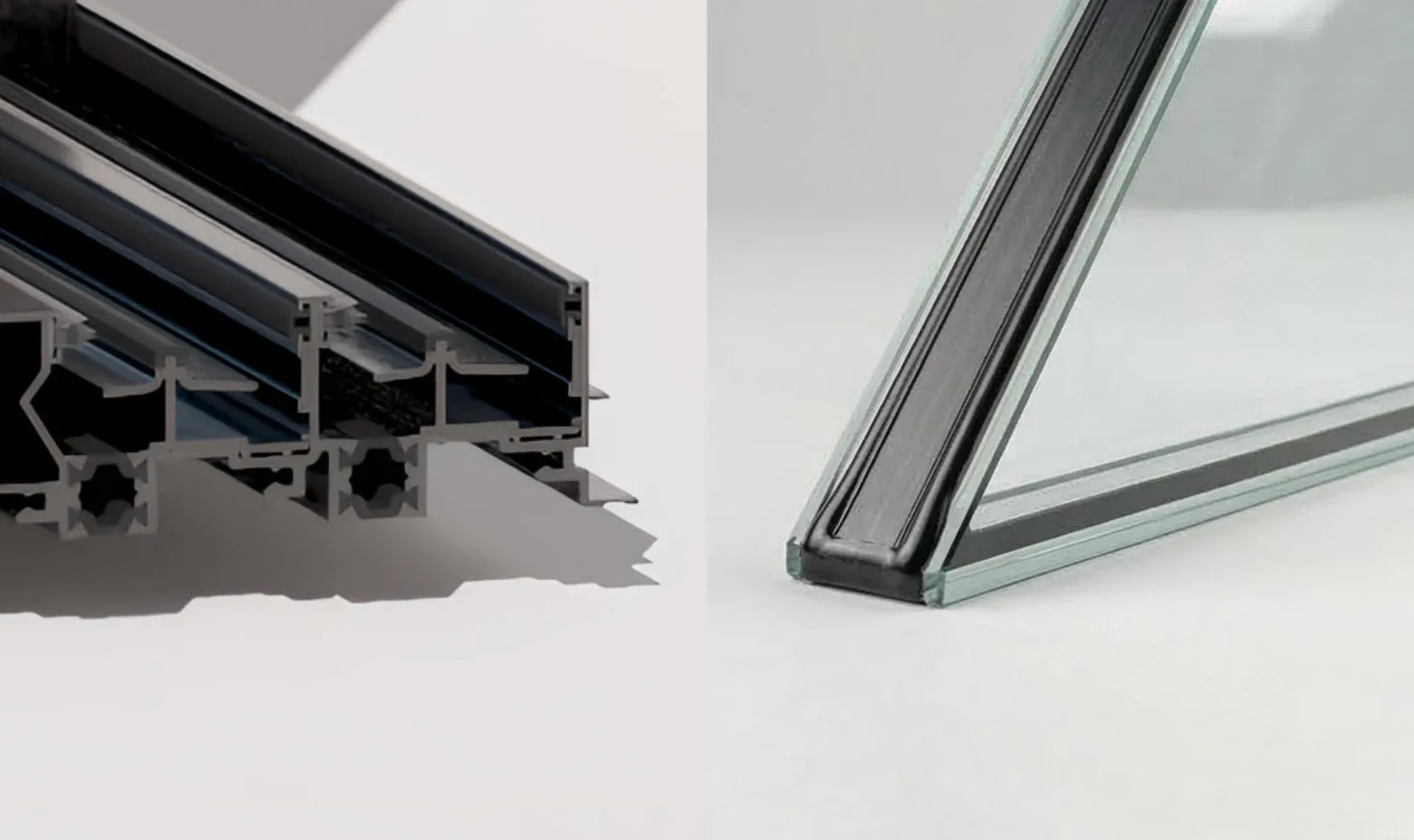
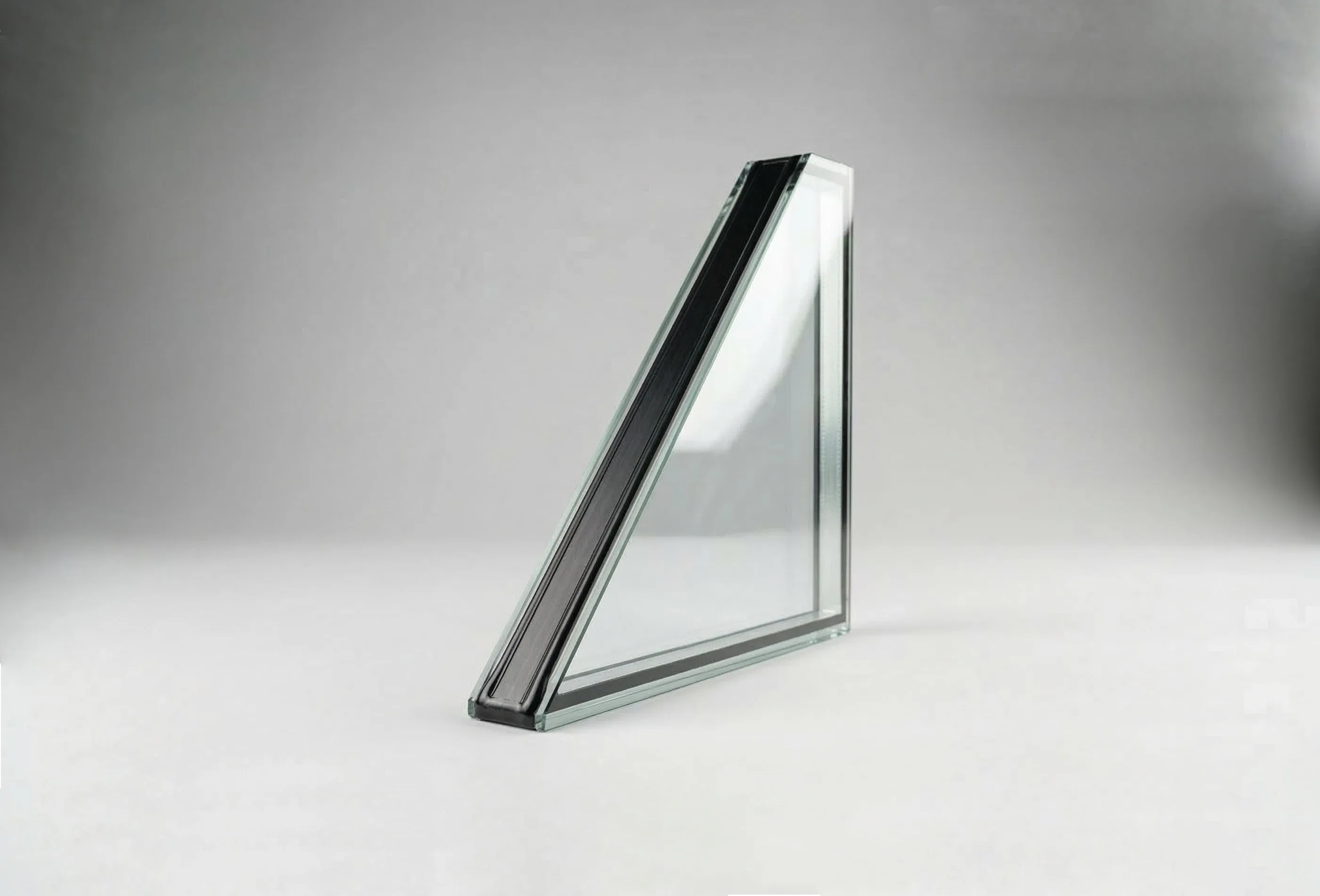
A double-glazed unit is two panes of glass held apart by a spacer bar around the edge, sealing the gap and keeping it dry. The bar is small, but it sits right where the warm inside pane meets the cold outside pane, so what it's made of has a big say in how cold that edge gets.
A standard aluminium spacer conducts heat quickly, bridging the two panes and pulling the inner edge of the glass cold. A thermal, or warm-edge, spacer swaps that metal for a low-conductivity composite, a stainless-steel hybrid or structural foam. Heat struggles to cross it, so the inner edge of the glass stays closer to room temperature.
Standard double glazing can still run a cold strip around the very edge of the glass. That edge is where condensation shows up first, and where a warm-edge spacer does its work.
Inside a sealed glass unit
The inner glass edge stays close to room temperature.
Cold grips the outer pane right to the glass edge.
- 1Outside cold chills the outer pane all the way to its edge.
- 2The warm-edge spacer resists conducting it across to the inner pane.
- 3The inner glass edge stays warmer, so edge condensation has far less chance to form.
What you gain
- Warmer glass edges. The perimeter of the pane stays closer to room temperature, so the cold band you can feel near the edge of standard double glazing fades.
- Less edge condensation. A warmer edge gives moisture less cold surface to settle on, so the foggy strip along the bottom of the glass is far less likely to appear.
- A better unit U-value. The spacer is a real share of the heat lost through a sealed unit. A warm-edge spacer lifts the glass unit's thermal performance by up to 10 to 12%* over a standard aluminium one.
- Hidden from view. The spacer sits at the very edge of the glass, behind the frame or glazing bead, so it changes nothing about how the window looks.
Myths, cleared up
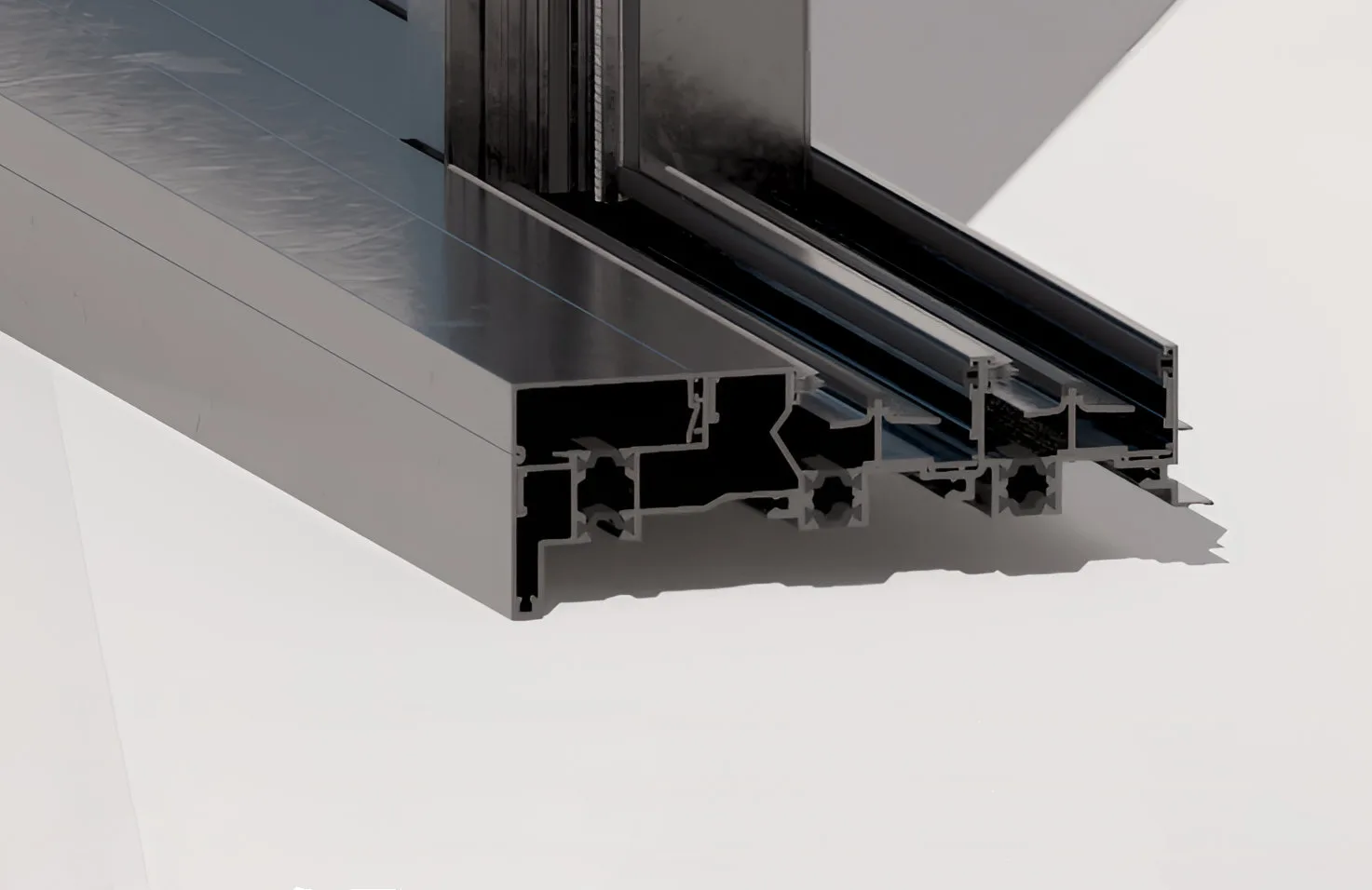
- "A thermal spacer is the same as a thermal break." Different technology, different place. The spacer sits between the glass panes; the break sits inside the aluminium frame. Our spacer-vs-break guide lays the two side by side.
- "The spacer bar doesn't really matter." It carries a real portion of the heat lost through a double-glazed unit, so upgrading it shows up in both comfort and bills.
- "All spacers are the same." They aren't. Stainless-steel hybrids beat plain aluminium but still conduct some heat; foam-based warm-edge spacers, with almost no metal, perform best.
- "You can see it from inside." It's tucked at the glass edge behind the frame, invisible in most installs, so the type you choose has no effect on the look.
When to spec it
A warm-edge spacer is a small upgrade inside the sealed unit, so it's easy to add when you're already double glazing, and it pairs naturally with a thermally broken frame: the spacer handles the glass edge, the break handles the frame. We'll spec the right combination for each room on a free site measure.
Estimated figures; actual performance depends on the glass unit, install quality and your home's conditions.